


Boom Town Belfast
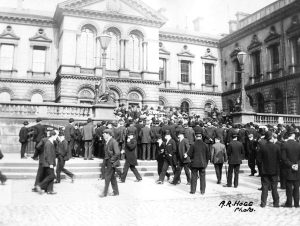
After The Great Famine, the trend of rural depopulation towards cities and emigration accelerated the growth of Belfast, and along with that came rises in urban poverty. In 1888 Belfast officially became a city, growing rapidly to meet the needs of the linen, tobacco, and shipbuilding industries. Meanwhile, spiritual fervour was aroused by the early mass rallies, often outdoors in places such as the Customs House, as shown above.
Foundations
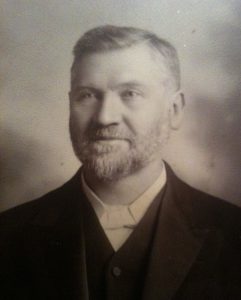
Leading Methodists of the time recognised that the needs of the most deprived in this new city, both spiritual and material, were not being well met, and The Methodist Church in Ireland approved the establishment of the Belfast Methodist City Mission (later BCM) in June I889. After some preliminary work in Sandy Row led by its first Superintendent, Rev. Crawford Johnson, the first formal service of BCM took place in the Hermon Hall, (where the Grand Opera House now stands) on November 10, 1889.
The first Grosvenor Hall
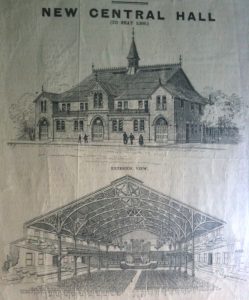
After using number of different venues, the Mission’s first Central Hall opened on Grosvenor Road in 1894, as BCM’s worship and social work hub, becoming known as the Grosvenor Hall. BCM’s various responses to poverty grew steadily to meet changing needs, including the ‘brother man’ services, soup kitchens and children’s holidays.
Response to War
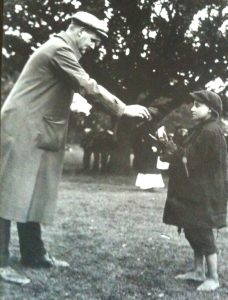
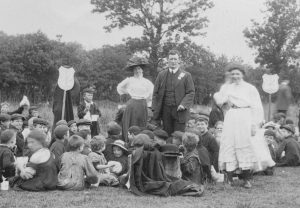
During WW1, BCM cared for many children of absent servicemen whose mothers were deemed to be struggling to cope. This service would come to quickly outgrow this cramped Whitehead location, and our holiday programme shifted emphasis towards County Down during the 1920’s
New Momentum
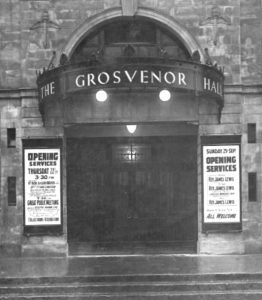
By 1927 a second, more permanent Grosvenor Hall was opened. The Ker Wing for social work was completed five months earlier, delivering social work to the destitute in soup kitchens and offering shelter to children often referred to as ‘waifs’ was delivered in partnership with Dr Barnardo’s “Ever Open Door”
Templepatrick House
1928 was the epicentre of an upsurge in Christian socialism, and during that year BCM was gifted Templepatrick House in Millisle, later renamed Child haven. This site would become the centre of BCM’s work with children for the next 60 years, including both an orphanage, and holiday retreat venue for inner city families in need of respite. The work in central Belfast continued to expand in response to rising need and unrest caused by the great depression of the 1930s.
Social Outreach
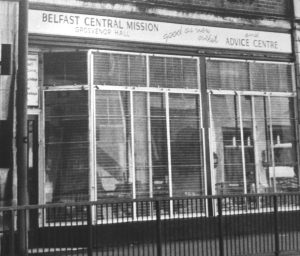
BCM’s social work expanded during the 1940’s and 50’s, including holiday homes and our first foray in social welfare and housing advice, the legacy of which remains today in our floating support services. During this time, and the onset of the Troubles in Belfast, the demographic changes happening around BCM started a steady decline in attendances at Grosvenor Hall
Response to the Troubles
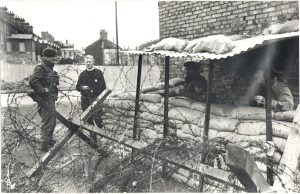
The NI Civil Rights movement preluded the beginning of The Troubles, during which BCM’s individuals and collective were greatly involved in peacebuilding and protecting the wellbeing of the most vulnerable. On numerous occasions Grosvenor Hall was affected by bomb damage, ultimately leading to the decision to replace the second Grosvenor Hall
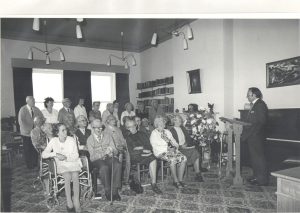
Caring for Older People
In 1960, BCM were bequeathed a home in Castle Rocklands in Carrickfergus, which was developed as a residential community for older people. This operated until 1997, when it was passed onto a local housing association. Proceeds from the sale supported the subsequent development of Copelands
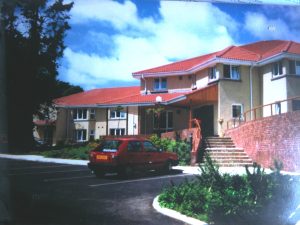
Professional Services
Under the Rev. David Kerr and Bertie Sharpe, BCM’s social care work was professionalised. In developing a ‘housing with care’ model, BCM opened Kirk House in collaboration with Oaklee Housing in 1993, offering 41 serviced flatlets for older people in East Belfast Our reach beyond Belfast expanded greatly, with support services emerging in Mid Ulster
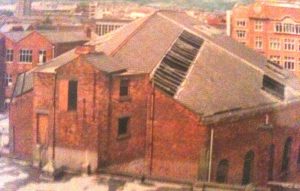
Moving On
Towards the end of the Troubles, the large second Grosvenor Hall, damaged in bomb attacks, was replaced with Grosvenor House, an office and conference facility, which opened in 1997. By 2006, the children’s home facilities at Millisle were no longer deemed fit for purpose, and the home was eventually closed. However, during the early 2000’s, BCM’s presence across NI would spread rapidly through new Housing and Family Support services.
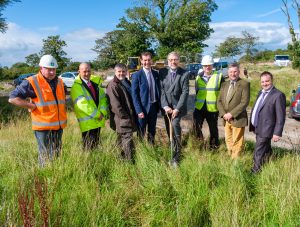
Breaking New Ground
Between 2003 and 2007, BCM expanded its residential care services for young people at sites in Bangor, Magherafelt, Belfast, and Dungannon. In 2008 Puddleducks Day Nursery was established in response to changing community needs in central Belfast. These changing priorities also were embodied by the development of Copelands, a new purpose-built residential care facility on the site of Child haven at Millisle.
Passing on the Legacy
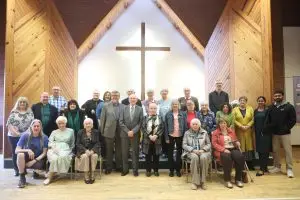
The Grosvenor Hall Congregation closed in late 2025, after decades of demographic change in the heart of Belfast. However, with the obvious sadness comes a renewed commitment to support the Christian faith through new expressions of ministry alongside the people that we work with. One such expression is the delivery of specialist chaplaincy services for older people both in our residential homes and in the wider community.